
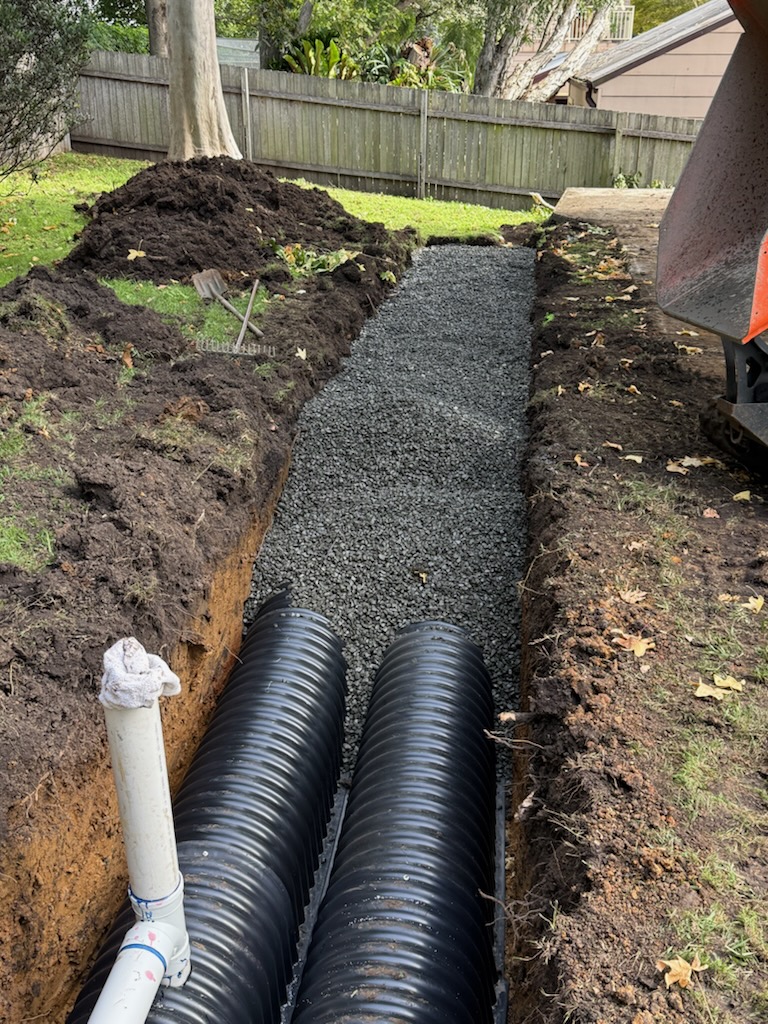
Sloping blocks can create great views, but they also create serious drainage challenges. When water is not managed properly, it will always follow gravity, either rushing off your block and causing erosion, or flowing into your property and pooling where it can do real damage.
In Wollongong and across the Illawarra, sloping block drainage problems are common due to clay soils, heavy rainfall events, and older drainage systems that were never designed to handle modern runoff volumes.
Understanding how water moves across a sloping site is the key to preventing flooding, soil movement, and long-term structural issues.
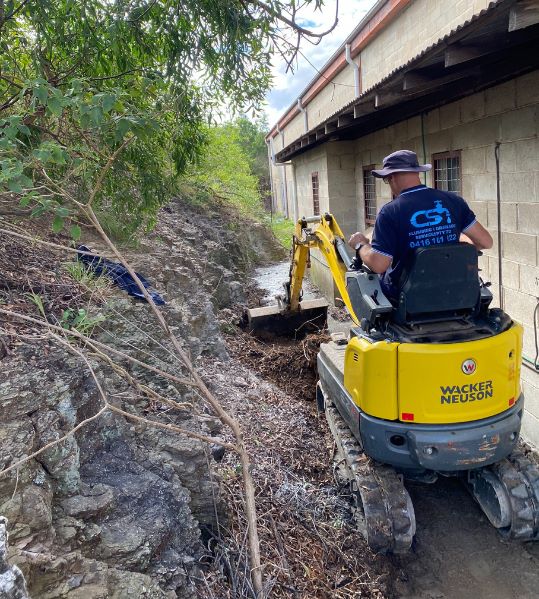
Why Sloping Blocks Create Drainage Problems
On a sloping property, water does not simply soak into the ground evenly. It accelerates as it moves downhill, picking up speed and volume. Without proper drainage control, this can lead to:
- Water rushing toward foundations
- Soil erosion and washouts
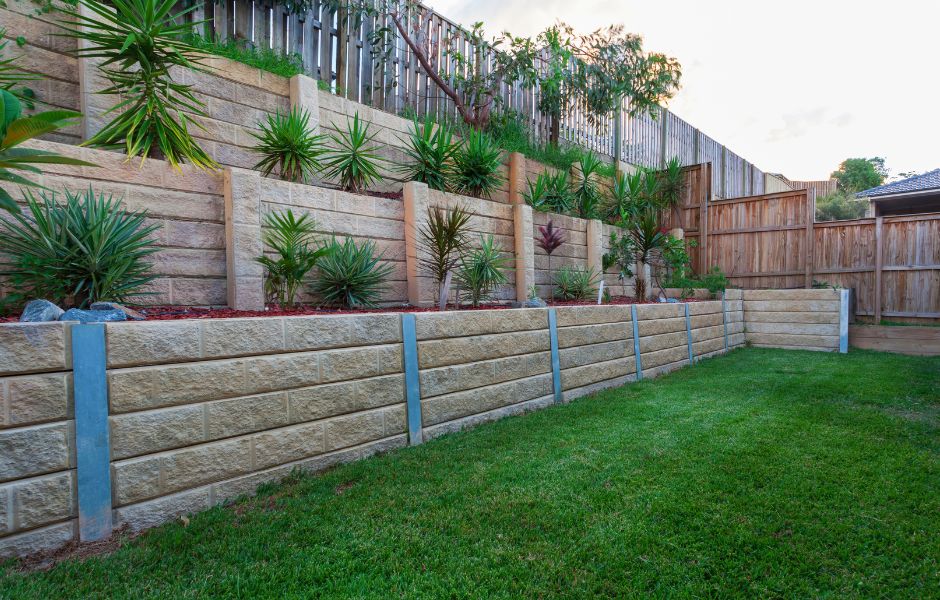
- Undermined retaining walls
- Flooding in garages or lower levels
- Water flowing onto neighbouring properties
Whether the problem starts above or below your home, unmanaged runoff quickly becomes a risk.
When Water Runs Into Your Block
Properties located downhill often suffer the most damage. Water from higher ground naturally flows toward the lowest point, and if there is no interception system in place, it ends up pooling around slabs, footings, and landscaped areas.
Common Signs Water Is Entering Your Property
- Pooling water after rain along fences or retaining walls
- Soggy lawns at the lower end of the block
- Damp subfloors or musty smells inside the home
- Water staining or rising damp near external walls
Effective Solutions for Incoming Water
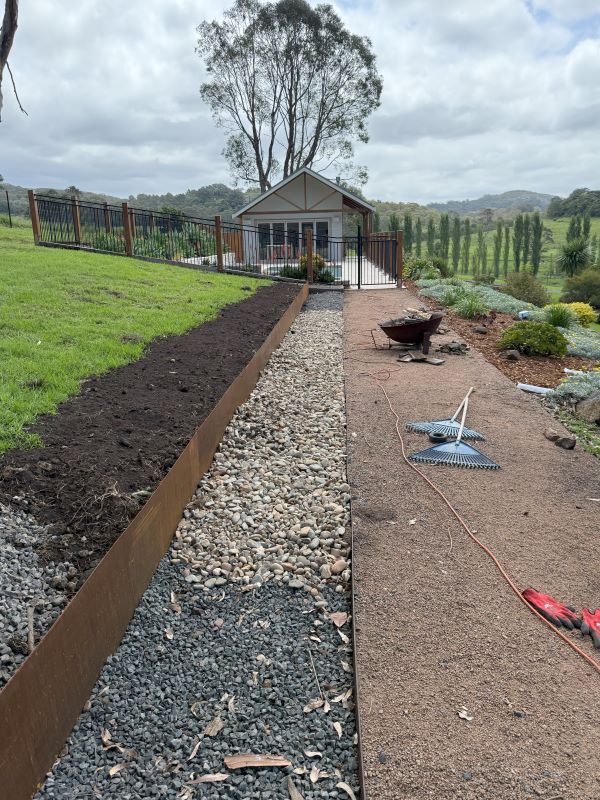
- French drains to intercept groundwater before it reaches structures
- Subsurface drainage behind retaining walls to relieve pressure
- Stormwater pits and pipes to capture and redirect surface runoff
- Correct grading to guide water away from the building footprint
These systems work together to stop water before it becomes a flooding problem.
When Water Runs Off Your Block
Homes positioned higher on a slope face a different issue. If water is allowed to rush off the property unchecked, it can erode soil, damage landscaping, and cause problems for neighbouring properties.
In NSW, property owners are responsible for managing stormwater runoff in a way that does not cause damage downstream.
Always seek further advice from your local council if you are having problems with storm water run off
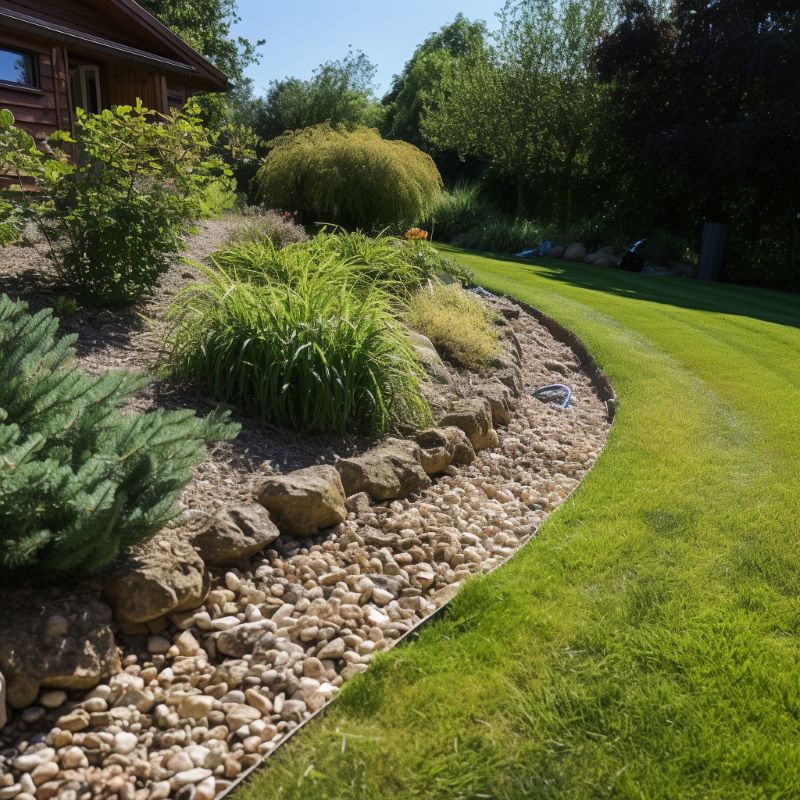
Common Signs of Runoff Problems
- Washed-out garden beds or exposed roots
- Erosion near paths, stairs, or driveways
- Water discharging directly onto neighbouring land
- Channels forming in soil after heavy rain
Effective Solutions for Outgoing Water
- Stormwater drainage systems connected to approved discharge points
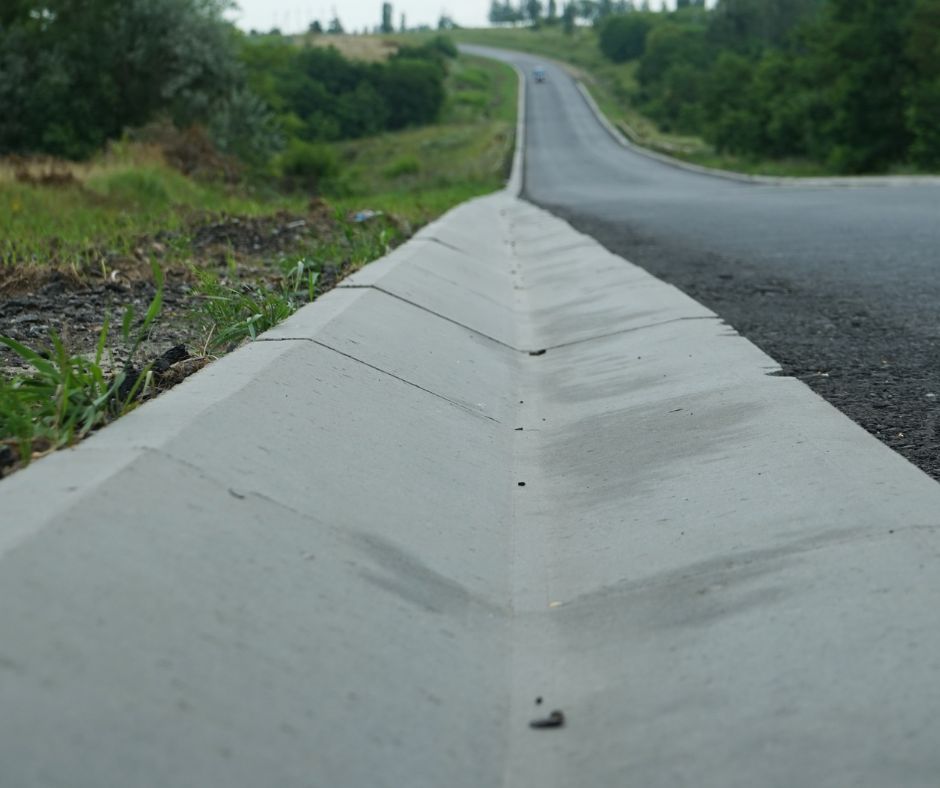
- Channel and trench drains across driveways and paths
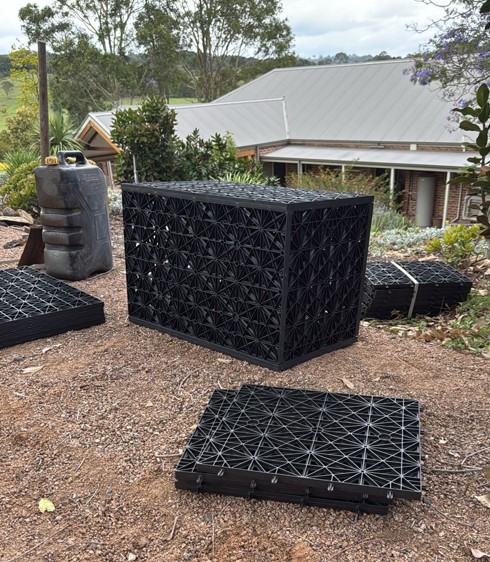
- Soakwells in suitable sandy soils to slow and disperse water
- Energy-dissipating outlets to prevent erosion at discharge points
The goal is to control water speed and volume before it leaves the site.
Managing Water on Steep or Split-Level Blocks
Many Wollongong homes sit on steep or split-level sites, where both problems occur at once. Water may enter from above and exit below, creating complex drainage behaviour.
In these cases, the most effective solution is a layered drainage system, which may include:
- Surface drainage for visible runoff
- French drains for groundwater
- Stormwater pipes for roof and hardstand areas
- Controlled discharge points designed to meet council requirements
This approach prevents overload on any single part of the system.
Why DIY Drainage Often Fails on Slopes
Sloping blocks magnify mistakes. Common DIY errors include:
- Installing drains without sufficient fall
- Discharging water into already saturated ground
- Undersized pipes that cannot handle heavy rain
- Ignoring how neighbouring properties affect flow
These mistakes often lead to repeated flooding and costly rectification work.
Why Professional Drainage Design Matters
Effective sloping block drainage requires:
- Understanding soil behaviour
- Calculating runoff volume
- Designing safe discharge points
- Integrating with existing stormwater systems
- Complying with NSW plumbing and council regulations
A professional drainage assessment ensures water is controlled safely, legally, and permanently.
Final Thoughts on Sloping Block Drainage
Water always follows gravity. On a sloping block, that means drainage problems will not resolve themselves over time—they usually get worse.
Whether water is flowing onto your property or off it, the right drainage system protects your home, your landscaping, and your long-term investment.
If you are dealing with pooling water, erosion, or flooding on a sloping site, addressing it early prevents serious damage and ongoing frustration.
FAQS For Sloping Block Drainage
1. Is it normal for water to flow downhill onto my property?
Yes. Water naturally follows gravity, and in NSW it is common for properties on lower ground to receive runoff from higher land. Problems usually arise when water flow has been altered, concentrated, or redirected by drainage works, paving, or landscaping.
2. Who is responsible for stormwater on a sloping block?
Homeowners are generally responsible for managing stormwater on their own property. This includes ensuring water is collected and discharged in a way that does not cause damage to neighbouring land or structures. Read more from Wollongong council
3. What if water from my property is flowing into my neighbour’s yard?
If stormwater has been redirected or concentrated due to downpipes, paving, or drainage changes, it may need to be managed or corrected. Proper drainage systems such as stormwater pipes, channel drains, or soakwells can prevent runoff issues and disputes.
4. What drainage solutions work best on sloping blocks?
The most effective systems often combine multiple elements, including stormwater drainage for roof runoff, channel drains for surface water, and French drains for groundwater. The correct solution depends on soil type, slope, and how water behaves during and after rain.
5. Can poor drainage on a slope cause structural damage?
Yes. Uncontrolled water can undermine footings, cause soil movement, and place pressure on retaining walls. Over time, this may lead to cracking, subsidence, or water ingress into lower levels of the home.
6. Should I fix sloping block drainage early or wait until it gets worse?
Drainage problems on sloping sites rarely improve on their own. Addressing issues early helps prevent erosion, flooding, and costly repairs. A professional drainage assessment identifies the cause and provides a long-term solution rather than a temporary fix.


Contact Us
Our Services
Get A Free Quote
Contact us for a free, no-obligation quote on your plumbing needs.